
In 2026, 89% of lab professionals in the United States report turnaround time as a primary KPI, which means every gap in tissue sample archiving and retrieval directly affects patient care and regulatory risk.
Key Takeaways
| Question | Answer |
|---|---|
| How does lab workflow optimization improve tissue sample archiving and retrieval? | By standardizing biosample lifecycle management, enforcing chain of custody, and using structured tissue blocks and slides storage systems, labs reduce search time, misfiles, and repeat testing. |
| What is essential for HIPAA compliant specimen storage in 2026? | Access controls, audit trails, secure transport, and CAP aligned retention policies, supported by specialized offsite lab sample storage partners. |
| How do offsite lab sample storage solutions affect turnaround time? | When integrated with clear SLAs and barcode tracking, offsite tissue sample archiving can shorten retrieval cycles while freeing space inside the pathology lab. |
| What technologies are shaping biobanking in 2026? | High-density archival systems, GPS tracked transport, LIS and biobank platform integration, and advanced tracking of every biosample movement from receipt to final disposition. |
| How can labs reduce specimen loss and misidentification? | By implementing standardized labeling, PDA based scanning at each handoff, secure storage containers, and documented retrieval workflows for tissue blocks and slides. |
| What role does offsite biosample storage play in CAP inspections? | Properly managed offsite archives provide documented chain of custody, environmental controls, and complete inventory reports that support CAP and HIPAA expectations during inspections. |
1. Why Lab Workflow Optimization Starts With Tissue Sample Archiving
In 2026, US pathology labs face a dual pressure: faster turnaround time and stricter regulatory oversight around every biosample. Optimizing lab workflows now starts with how efficiently we archive, locate, and retrieve each tissue specimen.
Disorganized storage of tissue blocks and slides does more than slow technologists, it risks patient safety, litigation, and CAP findings when a block cannot be located on demand.

We see the biggest workflow gains when labs move from ad hoc shelving to structured, indexed systems specifically designed for tissue sample archiving. This creates predictable retrieval pathways that align with LIS records and case numbers.
From a practical standpoint, optimized archiving supports every downstream process, including additional stains, molecular testing, research requests, quality investigations, and legal record production.
2. Mapping the Biosample Lifecycle for Workflow Clarity
Effective lab workflow optimization in 2026 requires a full view of the biosample lifecycle, not just the analytical phase. We map each step from specimen receipt to long term storage and eventual disposal or return.
For tissue blocks and slides, this lifecycle includes accessioning, grossing, embedding, cutting, staining, reporting, short term storage, archive transfer, retrieval, refile, and final disposition governed by CAP and state requirements.

When we diagram this lifecycle, bottlenecks become obvious: bottlenecked short term cabinets, mixed case types in the same tray, or lack of standard timeframes for moving cases to archive storage. Each gap creates delays when a pathologist or oncologist calls for a block.
By aligning physical handling steps with LIS status changes, we create a controlled flow that supports accurate tracking, accurate billing, and easier response to legal or clinical inquiries.
3. Designing Storage Systems for Tissue Blocks and Slides
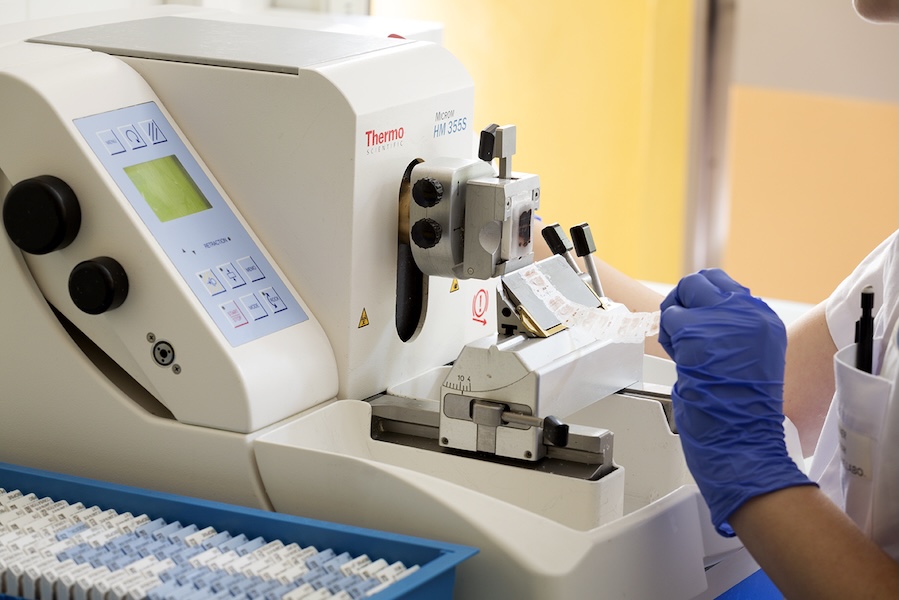
Tissue blocks and slides storage is not interchangeable with generic record storage in 2026, because every block represents a unique, irreplaceable clinical asset. We design storage that respects that reality and meets CAP expectations.
For high volume US labs, the most efficient systems standardize tray capacities, orientation, labeling, and indexing schemes so that any technologist can locate a biosample in seconds.
Key design principles for efficient storage
- Dedicated layouts for blocks versus slides, with clear separation and indexing rules.
- Barcode or 2D labeled positions, so location can be captured and updated in real time.
- Defined maximum capacity per tray or box, to prevent overfilling and misfiles.
- Standard color or label coding to separate years or institutions in consolidated archives.
Every improvement in physical design multiplies when paired with disciplined processes and electronic tracking, particularly for HIPAA compliant specimen storage that must be auditable for years.
This infographic highlights the top three benefits of optimizing lab workflows, helping labs operate more efficiently, reduce errors, and improve teamwork.
4. Offsite Lab Sample Storage in 2026: Extending Your Workflow Safely
As US pathology labs consolidate and volumes grow, many teams reach a physical limit on internal archive space. In 2026, offsite lab sample storage is a workflow extension rather than a separate silo.
We see the best outcomes when offsite partners operate as a dedicated extension of the pathology archive, with protocols that mirror internal chain of custody and CAP aligned retention schedules.

Workflow advantages of offsite biosample storage
- Freeing prime lab space for active processing, without losing access to archival material.
- Standardized pickup, scanning, and GPS tracked transport for every container.
- Controlled environments and monitored access, essential for HIPAA compliant specimen storage.
- Documented retrieval SLAs to support tumor boards, legal requests, and add-on testing.
With correct integration, offsite tissue sample archiving can actually shorten retrieval times, because inventory is structured and search processes are highly standardized.
5. Integrating Biobanking Technology With Pathology Workflows
Modern biobanking in 2026 goes far beyond simple frozen or paraffin block storage, especially in US systems that support research and clinical trials. Large programs such as the Cedars Sinai Biobank now manage more than 1.5 million specimens, which illustrates the scale that integrated workflows must support.
For hospital pathology labs, the practical question is how to align routine diagnostic tissue handling with biobank requirements without slowing clinical work.
Biobanking aligned workflow practices
- Standard pre analytical data capture, including consent flags, study IDs, and storage conditions.
- Integration between LIS and biobank management systems, so case status and block locations remain synchronized.
- Protocol driven aliquoting and labeling that supports both clinical retention and research use without confusion.
- Clear separation of research and diagnostic material at the storage and access control levels.
When this integration is handled correctly, labs can support advanced biobanking initiatives and innovations such as living organoid collections without sacrificing day to day efficiency.
6. Building HIPAA and CAP Compliance Into Every Specimen Movement
Workflow optimization in 2026 is inseparable from compliance for US labs, because every specimen movement is both a logistical event and a regulatory exposure. Only 34% of labs report fully electronic regulatory compliance and reporting within their LIS, which leaves significant opportunity to formalize specimen tracking.
For tissue sample archiving, compliance means more than temperature logs, it requires documented access control, chain of custody, retention, and destruction that can stand up to CAP inspection and legal scrutiny.
Elements of HIPAA compliant specimen storage workflows
- Role based access to storage areas, documented via keys, cards, or biometric controls.
- Real time logging of each removal, transport, and refile event, ideally via barcode scanning.
- Clear, written policies that define how long blocks and slides are retained and how they are destroyed.
- Business associate agreements with any offsite lab sample storage provider that handles PHI.
By embedding these controls into routine processes, labs reduce staff burden during audits and CAP visits, because reports and logs can be generated directly instead of reconstructed manually.
7. Specimen Security, Tracking, and Chain of Custody
In 2026, secure tracking of every biosample is no longer optional for US labs that handle complex oncology, transplant, or clinical trial work. Each case may involve dozens of blocks and slides that must be locatable and defensible for years.
We prioritize strict chain-of-custody controls that cover in lab movement, offsite shipping, and return, because a single lost block can trigger significant risk.
Best practices for specimen security and tracking
- Assign a unique identifier to every tissue block, slide, and container, recorded in the LIS or tracking system.
- Use handheld PDAs or scanners to log each specimen movement, including user, time, and location.
- Implement GPS tracking for offsite shipments that contain archival tissue blocks and slides.
- Conduct regular reconciliations between physical inventory and electronic records to identify discrepancies early.
These practices not only protect patients and providers, they also improve day to day efficiency, because technologists spend far less time searching for misplaced material.

8. Short Term Storage vs Long Term Archive: Structuring Daily Workflow
Pathology labs in 2026 benefit from a clear distinction between short term storage near the bench and long term archival storage, whether on site or offsite. Confusion between these zones is a common source of delays and misfiles.
Short term cabinets should support fast case review and add on tests, while archival systems prioritize density, traceability, and compliance for multi year retention.
Operational guidelines for storage tiers
- Define a standard timeframe for keeping cases in short term storage before archiving, for example 30 to 90 days after sign out.
- Apply identical labeling schemes across tiers to avoid relabeling or confusion.
- Ensure both tiers are represented in your LIS or tracking system, with clear location codes.
- Use daily or weekly transfer routines to keep short term areas clean and predictable.
These practices help maintain a clean working environment and prevent the gradual drift that causes crowded cabinets and misplaced cases over time.
9. Digital Tools That Support Biosample Storage and Retrieval
Digital tools are central to lab workflow optimization in 2026, but the goal is always the same, faster and safer access to tissue specimens. We focus on tools that directly support biosample storage and retrieval rather than broad, unfocused technology deployments.
For US pathology labs, the highest value gains usually come from barcoded tracking, structured inventory databases, and integrations between LIS, biobank systems, and offsite storage providers.

Digital capabilities that improve tissue workflow
- Electronic accession and storage location assignment at the time blocks and slides are created.
- Scan on demand document and requisition imaging that keeps clinical context linked to each biosample.
- Analytics on retrieval frequency, so frequently accessed materials can be positioned in more accessible zones.
- Automated alerts for retention thresholds and destruction eligibility, to manage archive growth responsibly.
When these tools are used in a disciplined way, they support both compliance and efficiency, while giving leadership data to refine staffing and storage investments.
10. Practical Steps to Optimize Your Lab’s Specimen Workflow in 2026
For US pathology labs looking to optimize workflows this year, the most effective changes are concrete, measurable, and aligned with regulatory expectations. We recommend a structured, stepwise approach rather than attempting to change every component at once.
Each step should deliver a visible improvement in turnaround time, retrieval accuracy, or compliance confidence so that staff engagement stays high.
Five action steps for 2026
- Audit current storage and retrieval. Measure average retrieval time, misfile rates, and how often staff cannot locate a requested block or slide.
- Standardize labeling and indexing. Apply consistent identifiers and positions across all tissue blocks and slides storage locations.
- Separate short term and archival zones. Define clear rules for how and when cases move between them.
- Digitize tracking. Introduce barcode scanning for movements and link locations to your LIS or dedicated tracking system.
- Engage a specialized partner. For growing archives, consider a dedicated offsite lab sample storage partner that understands CAP and HIPAA expectations for tissue specimen handling.
These steps, implemented methodically, create a robust, secure, and predictable workflow around every biosample, which is exactly what regulators, clinicians, and patients expect in 2026.
Conclusion
Lab workflow optimization in 2026 is no longer limited to analyzers and staffing models, it reaches deeply into how we handle, store, and retrieve every tissue specimen. By treating biosample storage as a core clinical process, not a back room chore, US pathology labs can protect patients, support research, and improve their most critical KPIs.
When tissue sample archiving is structured, HIPAA compliant specimen storage is assured, and offsite lab sample storage is integrated through secure tracking and documented workflows, labs gain the peace of mind that every block and slide is both protected and accessible whenever it is needed.